NMN (Nicotinamide Mononucleotide): Boosting NAD+ for Energy, Repair, and Healthy Aging
In recent years, NMN (Nicotinamide Mononucleotide) has captured the attention of researchers, biohackers, and health enthusiasts alike. Its role as a precursor to NAD+ (Nicotinamide Adenine Dinucleotide) places it at the center of one of the most exciting areas in aging and metabolic research. But what exactly does NMN do, and why is boosting NAD+ so critical?
What is NMN?
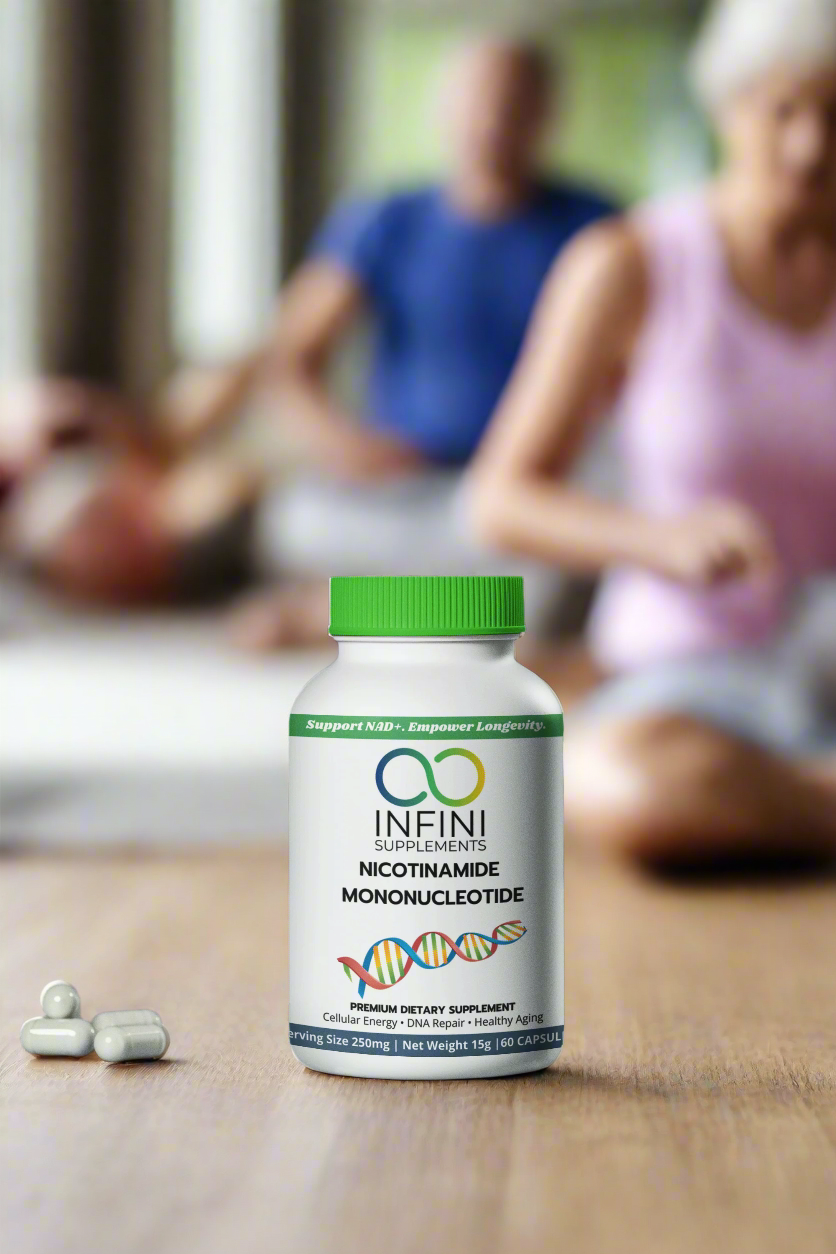
NMN is a nucleotide derived from niacin (vitamin B3). It is found naturally in small amounts in various foods, including:
Broccoli
Cabbage
Avocado
Cucumber
Edamame
Tomatoes
In the body, NMN serves as an immediate precursor to NAD+, meaning it is one of the final and most efficient steps in NAD+ biosynthesis.
NAD+: The Cellular Powerhouse
NAD+ is a coenzyme present in every living cell. It is essential for over 400 enzymatic reactions and plays a pivotal role in two primary domains:
Energy Production
NAD+ shuttles electrons during cellular respiration in the mitochondria, ultimately producing ATP (adenosine triphosphate), the energy currency of the cell.
Without NAD+, cells cannot generate energy, leading to dysfunction and death.
Cellular Repair & Maintenance
NAD+ activates sirtuins, proteins known as “longevity genes” that regulate DNA repair, inflammation control, and mitochondrial health.
It also fuels PARPs (poly ADP-ribose polymerases), which repair damaged DNA strands.
Unfortunately, NAD+ levels decline with age, dropping by as much as 50% by middle age and continuing to fall thereafter. This decline is linked to age-related conditions such as fatigue, neurodegeneration, insulin resistance, and cardiovascular decline.
How NMN Boosts NAD+
Supplementation with NMN bypasses several inefficient steps in NAD+ biosynthesis, providing a direct and rapid pathway to increase NAD+ levels in cells.
Studies show that orally administered NMN is absorbed quickly and converted into NAD+ within minutes. This makes NMN one of the most effective and bioavailable NAD+ precursors, alongside NR (Nicotinamide Riboside).
Potential Benefits of NMN
1. Energy & Metabolism
Boosts mitochondrial function, enhancing energy output.
Improves glucose tolerance and insulin sensitivity.
May counter metabolic disorders linked to aging.
2. DNA Repair & Anti-Aging
Enhances sirtuin activity, protecting cells from oxidative stress.
Supports DNA repair mechanisms, reducing mutation accumulation.
3. Brain & Cognitive Health
Animal studies suggest improved memory and reduced neuroinflammation.
May protect against age-related cognitive decline.
4. Cardiovascular Health
Restores blood vessel elasticity in aging mice.
Improves circulation and endothelial function.
5. Muscle & Physical Performance
Improves muscle endurance in aged mice.
Supports mitochondrial biogenesis, essential for strength and stamina.
Scientific Evidence
Yoshino et al., 2011 (Cell Metabolism) – NMN restored NAD+ levels in aging mice, improving insulin sensitivity and glucose tolerance.
Mills et al., 2016 (Cell Metabolism) – Long-term NMN supplementation in mice prevented age-associated physiological decline without toxicity.
Imai & Yoshino, 2017 (Nature Reviews Molecular Cell Biology) – Review highlighting NMN’s role in maintaining NAD+ and sirtuin activity.
Yoshino et al., 2021 (Science) – A human clinical trial showing NMN supplementation (250 mg/day) safely increased NAD+ and improved muscle insulin sensitivity.
Dollerup et al., 2019 (Nature Communications) – Nicotinamide Riboside (a related NAD+ precursor) increased NAD+ in humans, supporting the therapeutic potential of NAD+ boosters.
Safety and Considerations
Dosage: Human trials typically range from 250 mg to 500 mg daily, though animal studies often use higher doses relative to body weight.
Safety: Early studies report NMN is well-tolerated, with no significant adverse effects.
Limitations: Long-term effects in humans are still being studied. NMN is not FDA-approved as a treatment for disease.
The Future of NMN Research
The science of NAD+ and NMN is still developing. Current research is focused on:
Larger, long-term human clinical trials.
Potential therapeutic roles in Alzheimer’s, diabetes, cardiovascular disease, and age-related muscle loss.
Combining NMN with other longevity molecules like resveratrol and spermidine for synergistic effects.
Conclusion
NMN is far more than just a supplement trend — it represents a scientifically grounded approach to addressing one of the root causes of aging: declining NAD+ levels. By boosting cellular energy and enhancing DNA repair mechanisms, NMN offers the potential not just for longer life, but for a healthier, more resilient lifespan.
As research continues, NMN may become a cornerstone of longevity science, unlocking new possibilities for age-related disease prevention and human vitality.
References:
Yoshino, J., et al. (2011). Cell Metabolism, 14(4), 528–536.
Mills, K. F., et al. (2016). Cell Metabolism, 24(6), 795–806.
Imai, S. & Yoshino, J. (2017). Nature Reviews Molecular Cell Biology, 18(6), 325–340.
Yoshino, J., et al. (2021). Science, 372(6547), 1224–1229.
Dollerup, O. L., et al. (2019). Nature Communications, 10(1), 1–12.